Showing posts with label Brian Feinstein. Show all posts

Monday, March 22, 2010

A City Best Seen With A Map

Originally written February 17, 2010

As a child I never dealt with the trouble that comes from moving. I know many people who did and I can’t imagine having to restart my life and develop a new circle of friends. Had I not lived in the same house my parents bought in 1981 for my entire pre (and part of my post) college life, I would be completely different. Of course, it’s entirely possible I would be more able to deal with transition, which might have served me well when the Devils moved into their new home in October of 2007.

Now, this wasn’t quite the same change as when the Mets jumped across the parking lot to Citi Field 18 months later. I had spent far more time at Shea Stadium than Brendan Byrne Arena. But something still seemed odd about the opening of the Prudential Center. Perhaps it was because it was the first sporting venue in the New York Metropolitan area to open since the Byrne, which, interestingly, also opened its doors for the first time in 1981.

Perhaps it was only right that the first one of my teams to change its venue – three of them would over the next three years – came just months before I moved out of my childhood home for good, to the 21st-floor apartment I currently call home in Long Island City, Queens.

While in college I had paid a fair amount of attention to the Devils’ new arena – the planning, the spending, the groundbreaking. It would be tough in some ways to bid the Byrne its farewell. Despite watching the Devils lose the first time I went there, I had gone on a remarkable run over its final years. My mother and I witnessed Vancouver’s Todd Bertuzzi beat Martin Brodeur 56 seconds into overtime to hand the Devils a 3-2 loss to the Canucks on December 4, 2002. That would be the last time I ever saw the Devils lose at there. In fact, I wouldn’t see them lose in person again until a 4-1 loss to Buffalo on October 28, 2009 – their third season at Prudential Center.


Still, the Byrne had several flaws. It was a dull building far from any public transportation, which meant going there without your parents was impossible until you had a driver’s license. In New Jersey that didn’t happen until your 17th birthday. While I was a licensed driver by the opening of the Prudential Center – or as it would quickly be nicknamed in a nod to Prudential’s corporate logo: “The Rock” – there was still a joy that came with public transit. Moreover, the Devils simply needed a new home. The Byrne had become outmoded, difficult to get to and did not provide the revenue streams that many newer buildings gave their teams. The Devils had been clamoring for a new building for more than a decade by the time it opened, including a tenuous moment when the franchise nearly moved to Nashville immediately following its first Stanley Cup in 1995.


After years of back-and-forth, however, the Devils had finally found their home in the Rock, a beautiful, if poorly attended building in the Ironbound District of downtown Newark. To many, the choice of Newark, a downtrodden and poorer city was an odd choice for a hockey team to call home. Many feared the dangerous neighborhoods nearby and ESPN hockey commentator Barry Melrose joked, “Don’t go outside, especially if you’ve got a wallet or anything else because the area around the building is awful”.

Not surprisingly, Melrose’s comments struck a chord with the team, the fans and Newark Mayor Cory Booker. After all, the Rock was expected to be the anchor that revitalized a dying, crime-ridden city, and after Melrose agreed to come to Newark and see the building and the surrounding neighborhood for himself he changed his tune despite a derisive greeting from the crowds. Whether he did so out of honesty or contrition is immaterial. All I can say is when I first made my way there on November 2, 2007, the hefty police presence made me feels as if I was hardly in danger. I would find my own way to put my life at risk just hours later.

At the time I was three weeks into my new job and I decided to get tickets through work for my first venture to the Devils’ new lair. On my way to the game I parked my car outside my father’s house in Maplewood, New Jersey, a few blocks from the train station. As I lived at home for nearly a year after college despite working, parking at my dad’s house and walking to the train was something I had down to a science by the time I moved.

Usually, my father was working when I went to the office, but this time he was home so I decided to stop in and say hello. In retrospect, this may have been a poor choice as once I told him I was going to the Devils game with the company tickets his eyes lit up in anticipation that I was surprising him with a gift. After I informed him that I was actually going to the game with my friends Feiny and Justin, his expression changed considerably.

Oops.

I met Feiny on the train – Justin would be arriving later and, as the plan went, buying an upper deck seat and sneaking down to wherever our seats were. The public transit options were a bit untested for both of us and with this being only the Devils’ third game at the Rock not many people knew how it worked. Supposedly the public transit options involved going to one of the two train stations in the city of Newark, either Newark-Penn Station or Newark-Broad Street Station. At Penn Station it was easy enough, the platform was a brief two-block walk from the building. Broad Street, the station we were going to, was a further distance, but the Devils ran free shuttles to the Arena and as we found when we got off the train, there were dozens of employees ready and willing to direct you. As it turned out, getting to the building was as easy as could be.

As we approached the Rock it was infinitely nicer than Brendan Byrne Arena. While the Byrne was a boring, soulless box, Prudential Center had an inspired design that gave character and life to New Jersey’s hockey home. The walls were covered in red brick with dark gray borders encapsulating them, echoing the Devils’ color scheme and, supposedly, paying homage to the industrial bricklaying and railroad heritage of Newark, which is also known as “Brick City”. The front of the building featured a massive LED screen while two of its corners were made of massive glass light towers, which fans entered through as escalators led them to the main concourse. From the outside on game nights, the Rock brims with light and energy, an attempt to breathe life into a city that had been beaten down by decades of crime and poverty.

Newark had been a bustling metropolis for much of the early 20th century, with its population reaching nearly half a million in 1950. But racial tensions and eventually several days of riots in 1967 damaged much of the city and hastened its decline in population, wealth and stature. By the time the Rock opened, Newark’s population stood at nearly half of what it had at its peak. As Booker and others led the long drive back to respectability, this arena and the area surrounding it were central to the Brick City’s rehabilitation.

That is not to say that it was without its decent areas. Newark’s downtown business district was a perfectly safe place to spend your days toiling and the Ironbound district had its share of decent restaurants. My high school graduation was followed by dinner at a Portuguese rodizio restaurant in Newark called Seabra’s. But those decent areas couldn’t spare the city its reputation. In 1996, TIME Magazine dubbed Newark “The Most Dangerous City in America”, and while the ranking had dropped to a still reasonably robust 20th when the Rock opened, Newark’s reputation continued to precede it.

If its downtrodden areas were what Newark was, Prudential Center’s glitzy exterior and its clean interior were what it wanted to be. The inside of the building features far more character and decoration than the Byrne ever did. Murals detailing the Devils’ history, as well as homages to Newark and New Jersey’s sports history grace several walls along the main concourse. When the building opened, one section featured two huge banners with paintings of each building the franchise had played in from its early days in Kansas City as the Scouts, to its brief stay in Denver as the Colorado Rockies and both of its arenas in the Garden State.

One exhibit featured all of the jerseys the Devils had worn throughout their history, and another wall was painted with a bench featuring the Devils’ greatest all time players, among them Craig Billington, Bruce Driver, John MacLean, Slava Fetisov, Claude Lemieux, Scott Stevens, Scott Niedermayer, Ken Daneyko and, of course, Martin Brodeur. Echoing a trend started by the Minnesota Wild, the interior of the arena on both levels is lined with the jerseys of every high school hockey team in the state in an attempt to draw a closer connection between New Jersey’s team and its residents.

Lastly, and perhaps most interestingly, the tops of each urinal in the men’s room has an all-too-necessary Devils logo on top of it.

The building didn’t just raise the experience – or the cost – for the fans. It was also a one-stop location for the organization, featuring office space as well as the Devils’ practice rink. The Rock was only the second building in the League to house one after Nationwide Arena in Columbus, and while there is a huge glass window that allows fans to look in on the rink during practice, this was another sign for me that I was getting older. I had more than once dragged my father to South Mountain Arena in West Orange, New Jersey, a short drive from my home to watch the Devils practice. Still, with the advantages for the team, I’d find a way to get over it. Just about everything in the Prudential Center was a dramatic improvement over the Byrne.

Feiny and I were hoping our seats would be in the building’s two All-You-Can-Eat Sections. From blue line to blue line, the lower bowl sections featured large leather seats and were attached to two bars, cleverly called the “Fire” and “Ice” bars, which featured free all you could eat food and non-alcoholic beverage. While during the games it was typical arena fair – burgers, hot dogs, pizza, chicken fingers – before the games multiple carving stations were set up with finer choices like prime rib and duck. For those not fortunate enough to score those tickets, other food options around the arena still feature various types of cuisine with many coming from the city of Newark itself.

Unfortunately, while I had gotten nice seats, they were in the section over from the free food. After Justin arrived and somehow weaseled his way to our section, he and Feiny decided it was only right to sneak into the fire bar and grab some food. I was gun shy about raising trouble and reluctantly left them to their own devices while I sat and watched the game. I assumed their efforts would be fruitless, but sure enough the pair returned to our seats 15 minutes later with a slice of pizza for me.

I found it a bit of meaningful symmetry that I would see the Devils face the Maple Leafs in my first game at the Rock as I had 12 years earlier for my first game at the Byrne. In a lucky change of fate, however, the result was different this time around. While the Leafs controlled play for much of the first two periods, outshooting New Jersey 20-9, the Devils somehow managed to keep it tied before John Madden potted a shorthanded goal with 4:12 left to play to break a 1-1 stalemate. Zach Parise would add another 97 seconds later and the Devils had a 3-2 win in my first visit to their new home.

The streak would remain intact for another night.

While I was convinced the action was over for the night, I would find myself in for a surprise. With a rare Friday night off, my original plan was to continue on to New York and spend the night drinking with friends. Feiny, Justin and I,were unable to find the shuttle back to Newark-Broad Street station, however. The next time I came I would wonder how on earth I missed it. It was in the exact same place we were dropped off beforehand. But rather than stand there and wait for a second shuttle to arrive, we decided to expedite the process by simply walking to the train.

After all, how far could it be?

And so off we went through downtown Newark, which seemed perfectly fine on a Friday night. Crowds who were leaving the game or their offices still surrounded us and we headed on with impunity. As we continued the surroundings started to get somewhat less pleasant, but we assumed the station must only be a few blocks away. At one point we happened upon a theater with a long line of people in their early to mid-20s waiting outside. Justin, never one to pay social awkwardness any mind, suggested we run across the street and check out the show. While Feiny was amenable to the idea, I was not and insisted we continued walking.

Justin, however, has a tendency to be a free spirit and so off he went to see what was happening. This being the heart of downtown Newark, the crowd outside the theater was entirely African-American. In fact, there wasn’t a non-black person among them. While I detest bigotry, there was no denying that we would seem at least a little out of place. Between the three of us, our collective heritage was 83.3% Caucasian Jew and 16.7% Indian. We did not fit in, and the stunned reaction of the entire crowd when Justin nonchalantly asked them what was happening at the theater let us know it.

All of them gave us a look as if they had no clue what we were doing in the heart of Newark on a Friday night. After all, I was wearing cargo pants, Birkenstocks and a purple Northwestern hooded sweatshirt. It was clear to them I did not belong. Justin continued to press for details about whatever concert was about to be performed, but I refused to play along and started walking. As we continued it started becoming apparent that the train wasn’t as close as it seemed.

The walk continued, the lights got dimmer, the surroundings got darker and more and more broken glass appeared on the ground. More and more people on the street were asking for money and the buildings became more rundown. It was about the time the malnourished prostitute with several missing teeth offered her services to us that I realized we were lost in one of the most dangerous cities in America.

I started walking faster.

Justin and Feiny, in their absentmindedness couldn’t enjoy the light evening stroll enough. They spent most of the walk laughing, but I decided I was done aimlessly wandering the lesser parts of Newark. When we finally happened upon an onramp for I-78, we knew we were far from the right place. We soon found ourselves in a convenience store where the clerks were unable to provide adequate directions.

We walked further and I called my mother to see if she could find a map online to tell us where the train station was. Fearing for the life of her child as mothers often do – although perhaps this time it was rational – she insisted she come and pick us up, but being an adult who dreaded the idea of his mommy coming to the rescue, I rebuffed her offer and insisted we’d find our way back. Eventually, our clueless triumvirate found its way to a McDonald’s on McCarter Highway, where I asked the security guard – apparently McDonald’s in Newark requires protection – how to get to either of Newark’s main train stations.

We were, in fact, nowhere near either of them and unwilling to undertake the long trip to wherever it was we needed to go, I called mommy to rescue me. After looking up where we were and how to get there, my mother was on her way.

The three of us sat down in a booth and took deep sighs of relief. I was badly in need of comfort food so I went to the counter and ordered a vanilla sundae. A few minutes later the manager let me know that the machine which pumped out whatever it was they thought was ice cream was actually broken.

Of course it was.

As I sat back down with what I thought was my last defeat of the evening, Justin reached into his backpack and pulled out a crumpled piece of paper. After unraveling it he noticed it was a color-coded map of Newark which had been given to him by Devils personnel at the train station. Not only did Justin have a map on him the entire time that would have easily directed us to the station, but we had wound up walking some three miles in the complete opposite direction.

At this point all I could do was laugh at what had been a long comedy of errors. Soon my mother was there and we were back in Millburn with no harm done. The three of us headed to Justin’s home where we spent the next few hours laughing about the misfortune over a six-pack of Yeungling and all the leftover Halloween candy the Goldstein household had to offer.

I may have risked my life at various points in the evening, but all in all, good friends, good beer and a pile of Reese’s Peanut Butter Cups wasn’t a bad way to spend a Friday night. With my memories in tow, however, I would never spend one the same way again.

The next time, I waited for the shuttle.

Tuesday, February 23, 2010

Memories From Milwaukee

Originally written on May 22, 2009

While I had already decided I wanted to see every Major League Baseball park, my first exposure to stadia outside the New York area came in the spring of 2001. I was 15 at the time, and while the long parade of college visits most American High Schoolers endure was not yet in full swing, my mother had wanted to visit my sister at the University of Wisconsin that April and figured it was as good a time as any to get the show underway. Our first stop came in Evanston, Illinois, where I would be exposed to Northwestern University, an event that would obviously have longterm ramifications. I was hoping to see Wrigley Field for the first time that week, and I did, but the Cubs had hit the road, and while my mother and I did accidentally wind up attending a White Sox-Twins game at the new Comiskey Park, a story for another time, I have a far stronger recollection – and perhaps connection – to a later stop we would make in Wisconsin.

This probably has to do with the fact that the Mets were involved.

When my mother and I had planned out the trip to visit my sister in Madison, I noticed that Milwaukee, not a far drive away, was on the schedule for the Amazins’ current road trip. This more or less set in stone that whenever the Mets are within 200 miles of me on the road, I have to attend. After begging and pleading, we finally bought tickets for myself, my mother, Stephanie and her roommate.

In both Chicago and Milwaukee, this would be the first time I saw parks that came in the modern style. While we were impressed when we saw Comiskey, the excitement would fade after the trip to Miller Park and Milwaukee made it clear the Sox had missed the boat. Granted, given that Miller Park was in its first season and Comiskey in its 10th the fight was not fair. The Brewers had had time to see where the popular architectural fads would go before breaking ground on their new home.

But advantages aside, what a home it is. While Comiskey was the first stadium I saw a game in that hadn’t been built before 1965, Miller Park was the first I had been to that fell under the architectural trends started in Baltimore when the Orioles cut the ribbon on Camden Yards in 1992. As well, as the Brewers’ new home had only been in use for three weeks at the time I got to it, it hadn’t yet lost its new car smell. The floors were all smooth and clean, the concourses were wide with direct views of the field, the plaza outside was bereft of litter – even the parking lot signs were shinier.

For someone who had spent their life walking the cold, characterless, narrow concourses of Shea Stadium and Yankee Stadium, this was an overwhelming wakeup call for what the baseball viewing experience could be. It was clear that a stadium did not simply have to be the vessel for telling the story. It could aesthetically become one of the characters.

Miller Park is a visually striking building from the outside. Its external walls are covered in red brick that give it the flavor and appearance of a traditional, older park, but at the same time, the stadium is fitted with a retractable roof that could never be confused with a structural element of the 1920s. It is a deep green that finds its apex above the stadium’s main gate, behind home plate, and fans out across the top of the park. While the roof when closed does make the experience feel somewhat artificial, the areas above the brick wall and beneath the edge of the roof are large glass sections that allow natural light to pour into the stadium. The entire back wall of the building also opens up to allow sunlight to illuminate the playing surface.

The sightlines are phenomenal and the fans are a dedicated bunch who are well-humored when the Brew Crew is in lean times, and raucous in the winning seasons. The highlight for many at the stadium is, of course, the Sausage race, which takes place midway through the 6th inning, when contestants dressed as a hot dog, german sausage, polish sausage, italian and chorizo sprint around the diamond. The silly, but highly enjoyable spectacle has been copied in numerous other stadiums.

The race also gets a fair amount of televised publicity, and may have received the most attention in 2003 when the Pirates’ Randall Simon knocked down the italian sausages mid-race with his bat as a joke. When it became apparent that he had injured University of Wisconsin student Mandy Block who was racing in the costume, the contrite Simon gracefully accepted a three-day suspension and his $432 fine after being cited for disorderly conduct. He purchased a free sausage sandwich for every fan in section 432 when he returned to Milwaukee as a member of the Cubs weeks later, while Block, and this is not a joke, would be awarded a certificate of bravery from the National Hot Dog & Sausage Council.


Despite the raging popularity of the sausage race, however, my favorite in-game quirk of the Brewers is the tradition of Bernie Brewer dropping down a gigantic slide in the outfield after each Milwaukee home run. Given the jet stream in the park, this happens quite a bit. My love for this tradition comes not out of zest for seeing a cartoony, mustachioed mascot being dropped on a platform to wave around an oversized Brewers flag, but rather because every time I see it, I try to imagine Bernie Brewer sliding into an enormous mug of beer. Not only would this be infinitely more awesome than landing on a raised platform, but it would be keeping a connection alive to the Brewers’ former home of Milwaukee County Stadium, where Bernie did, in fact, dive into a giant mug of beer each time a Brewer went yard.

The platform will have to do.

Most of my first visit was spent staring in awe and watching my mother suffer one anxiety attack after another as she feared for my safety when I made obnoxious comments to native Wisconsinites about the superiority of my defending-National League champion Mets. Coming through for me as they always do, the Mets lost that night. In the years since, I have found the Mets often lose when I see them on the road. They love to make their brash fan base look good, after all. On a positive note, the game was particularly memorable for the fact that defensively challenged Mike Piazza threw out not one, but two would-be base stealers in a single inning. As I remarked at my surprise, a Brewers fan in front of me asked me when the last time Piazza had turned that trick was. I told him I wasn’t sure he ever had.

The four of us all received souvenir fishing hats with a logo for Miller Park’s inaugural season on them as a free promotional item, which is surely buried in a pile somewhere in my childhood home. As I began attending Northwestern University two years later, less than 90 miles south of Milwaukee, this would not be my last stop at Miller Park. In fact, over several visits whenever the Mets were in town, I have become more and more familiar and more and more a fan of its grounds. I have developed fond memories of chatting with other displaced Mets fans and receiving angry scowls from seven-year-old girls when I openly cheered.

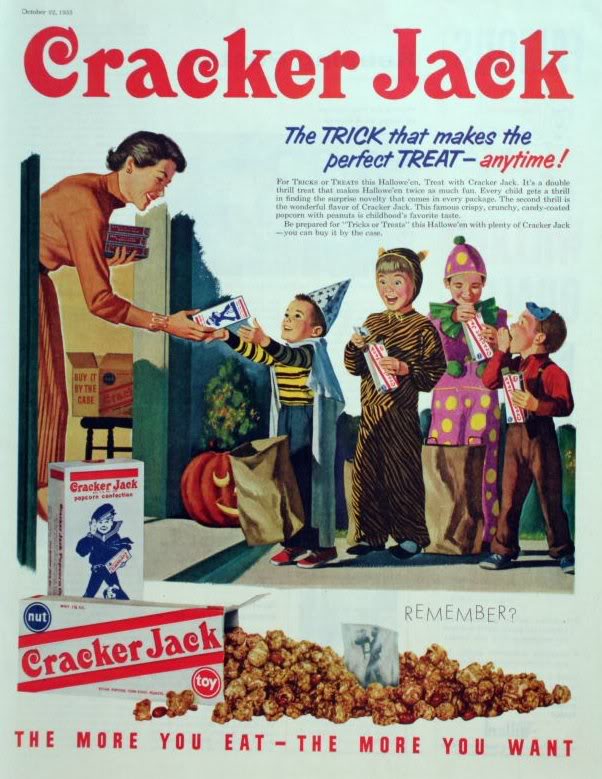
On one occasion I had taken a weekend vacation to Milwaukee with my friends Mike Trawicki, Amit Marwah and Blake Kluger for some Mets-Brewers baseball, a round of golf and, of course, Culver's. On the way up we would see some very interesting license plates and be fairly confused by a sign for America's Black Holocaust Museum. I would find that golf is indeed, as Mark Twain put it, a good walk spoiled. In my case, I broke a wedge while frustratingly banging it into the fairway leaving Mike to talk the course into not making me pay for it. The highlight of that trip was probably Mrs. Trawicki’s homemade cinnamon bun frosting, though a venture to try Mike’s long-vaunted Milwaukee Mexican food comes close, but my favorite incident came when I tried my hand at entrepreneurial negotiations at the stadium. As a 15-year-old Cracker Jack vendor walked by I asked him if he was interested in making a deal.

“How much for that big Cracker Jack bag you have around your shoulder?”

“Uh….”

“I’ll give you $20 for it.”

“Um… let me ask my manager.”

The summer before, a co-counselor at Fairview Lake named Cody Umbach had tried the same trick at a minor league New Jersey Cardinals game and come away with a free souvenir simply because they had extras. Fifteen minutes later when the vendor returned, I’d find in the majors, even in Milwaukee, they weren’t quite as generous.

“Uh, yeah, my boss told me they’d fire me if I sold my bag to you.”

“Well, what if you went to the bathroom and somebody ‘stole’ it?”

“I don’t think we can do that after I already asked my boss about it.”

Undeterred, another Cracker Jack vendor came by, who must have been in his early 40s and I posed him the same question.

“Eighty bucks,” he said.

I passed.

The memories weren’t always good ones at the stadium, mostly because the Mets, despite generally being the superior team, usually lost. One such day, Bill Hall clubbed a walkoff home run on Mother’s Day in 2006 with his pink breast cancer awareness bat to send the Mets and Pedro Martinez to a defeat.

The game I will remember most clearly in the stadium, however, was from the day before, when I, my girlfriend at the time, Jess, and my senior year college roommate Zach Silka had driven up to Milwaukee to see a thriller of a game. The Mets would actually prevail after Paul Lo Duca’s solo shot off Derrick Turnbow lifted New York to a 9-8 win just a half-inning after Milwaukee had erased a four-run deficit on back-to-back homers. The game, however, is not memorable to me because of its thrilling, and satisfying conclusion, nor is it memorable because my friends Deek and Feiny, who drove in from Madison to meet me for the game nearly picked a fight with some of the drunker Brewers fans in the crowd.

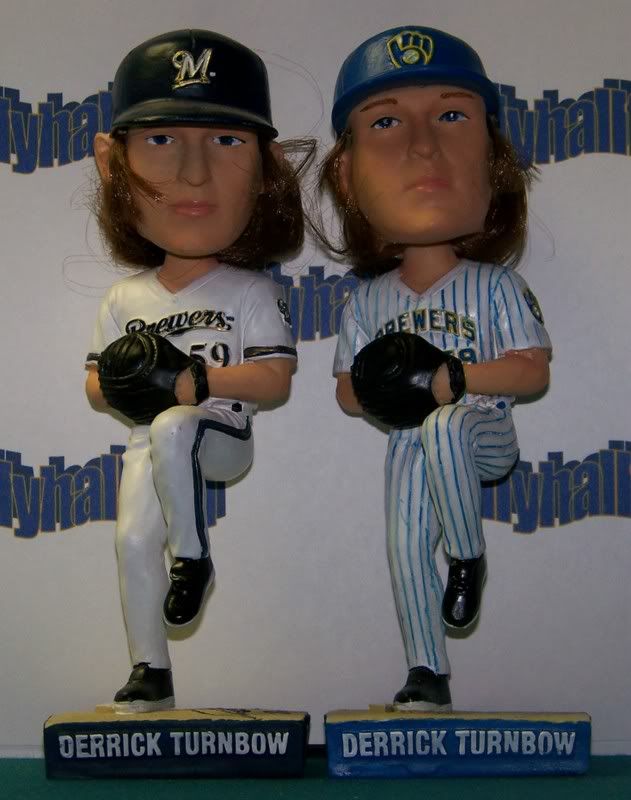
Instead, I will remember it because despite arriving to Milwaukee well in advance of the first pitch, we had underestimated the Dairy State’s fascination with Turnbow, their mulletted closer. That night was Derrick Turnbow bobblehead doll night, with his mane being immortalized with actual glued on hair. It was particularly ironic that he should come in to take the loss in a tie game in the top of the ninth inning, but as I noted, players often suffer bizarrely poor performances on bobblehead nights in their honor for no apparent reason. As Feiny facetiously pointed out, “Babe Ruth died on his bobblehead doll day.”

The demand for this particular promotion was so strong that we struggled to find parking anywhere near the stadium and eventually put our car next to Deek’s in a vacant lot next to a McDonald’s which sat down the road from the stadium. The five of us didn’t enter the turnstiles until the sixth inning.

I probably should have assumed ahead of time that the entire state of Wisconsin gets in gear when there are limited edition free nodding statues in the mix. The stadium’s attendance that night was well in excess of its seated capacity, as the up-and-coming Brewers – they would reach the postseason two years later for the first time since 1982 – proved a strong draw. Doubly so on promotional nights. I would leave the park satisfied considering the Mets won the day, but I would be lying if I claimed to be calm and relaxed throughout the entire course of trying to find a parking spot. This irritation was only worsened when I found that Deek and Feiny decided, despite the game already being five innings old, to actually go into McDonald’s after parking. Fortunately, they were so hungry that they managed to scarf down their food as we walked to the building, picked up our tickets and entered a mere 2/3 of the way through the game.

But we did get our bobblehead dolls – and in the limited edition throwback uniform to boot.

Zach in the meantime felt the need to overcome whatever stress he was recently enduring by drinking a lot of beer. And quickly. Two innings after we showed up it was very clear I was going to be driving home as Silka was in no condition to do so himself. Considering we only got to watch three innings of the game, the amount of time for him to sober up was practically nil. Zach had also convinced us to divert from our original plan of spending the night in the party town of Madison because Deek and Feiny broke it to him that at this point of early May, most University of Wisconsin students were studying for finals or home after finishing them.

The inebriated Silka convinced me we must drive back to Evanston for a party that wound up never happening, and after he told a number of Mets fans at the stadium that he was from Syosset, New York instead of his actual hometown of Toledo, Ohio, Zach quickly passed out in the back of his SUV as I guided it back to Evanston. Halfway through the ride Zach woke up and told me we absolutely had to pull off at the next hotel so he could use the bathroom. This required going through an unmanned tollbooth, which we shockingly didn’t have enough change on us to pay for. As Zach threw pennies in the bucket and insisted we go through anyway, I stopped at a hotel where he calmly went inside to ask the front desk where the rest room was.

A few minutes later Silka emerged. Rather than walk to the car he casually strolled around the side of the building and relieved himself behind a dumpster. Evidently they wouldn’t let him use the bathroom inside. It seems strange that my strongest memory from visiting Miller Park might be seeing my roommate get turned away from a public rest room, but knowing the zaniness of that entire night, it sort of makes sense.

And knowing what shape he was in, well, I can’t say I blame them.